FACNAV Fires
FACNAV Fires (known as MANTIS Fires in the UK) transforms how military forces coordinate artillery, air support and precision strikes.
Digital fire support coordination for joint operations
FACNAV Fires (known as MANTIS Fires in the UK) transforms how military forces coordinate artillery, air support and precision strikes. By digitising the entire fire support process – from target identification to weapon impact – the system delivers the speed and precision that save lives in combat and help maintain situational awareness in high-stress environments.
In the chaos of combat, fire support saves lives, and every second counts. But traditional voice coordination is slow, error-prone and vulnerable to jamming. A misheard grid reference or garbled call sign can mean the difference between mission success and catastrophe.
FACNAV Fires eliminates these risks, enabling personnel at all experience levels to contribute to complex fire missions. Refined through years of operational use and extensive experience with different aircraft types, the system follows established NATO fire support procedures while adapting to national requirements and maintaining full coalition interoperability.
Accelerating fires in the digital battlespace
Fire support coordination presents similar challenges whether you're a JTAC (Joint Terminal Attack Controller) directing aircraft, an FO (Forward Observer) calling in artillery or a JFO (Joint Fires Observer) coordinating multiple effectors: managing complex, time-critical missions with redundant equipment that doesn't integrate, creating dangerous inefficiencies when seconds count.
FACNAV Fires revolutionises this process through complete digitalisation. Target data flows instantly from sensors to shooters through secure, jam-resistant networks, enabling distributed support to Ground Force Commanders from any position with connectivity, dramatically increasing operational flexibility.
Unlike basic digital fire support tools, FACNAV Fires isn't just digitising communication. The system provides complete situational awareness – showing friendly positions, enemy locations, and ongoing operations. This comprehensive picture is essential for true Close Air Support, where aircraft must coordinate precisely with ground manoeuvre.
The system transforms fire support through these core capabilities
By giving every qualified soldier the ability to direct fires digitally, FACNAV Fires fundamentally expands the force's ability to deliver coordinated strikes when and where they matter most.

Digital target handoff
eliminating voice communication errors
Automated safety calculations
preventing friendly fire incidents
Real-time coordination
with ground and air units
Cutting response times dramatically and easing the execution of
mission pre-planning CAS missions
Seamless integration
with a wide array of sensors and communication systems, enabling precision from any connected platform
Full compliance
with established NATO procedures and standards, ensuring coalition interoperability
Key features
Digitally Aided Close Air Support (DACAS)
Enables ground controllers to send targeting data directly to aircraft via VMF (Variable Message Format) and Link 16 – a frequency-hopping, jam-resistant, high-capacity data link. Target data transmits digitally in seconds, eliminating voice miscommunication while maintaining full compliance with established CAS procedures. Pilots see what ground forces see, ensuring faster and more accurate strikes while enhancing mission safety.
Digitally Aided Fire Support (DAFS)
Enables all arms observers to request fire support through VMF, expanding their reach beyond traditional communication limits. The Fire Support Gateway (FSGW) forwards requests across different networks, allowing observers to access effectors they normally couldn't reach. This digital coordination dramatically accelerates the fire mission cycle while reducing errors and meeting operational standards.
JTAC and JFO integration
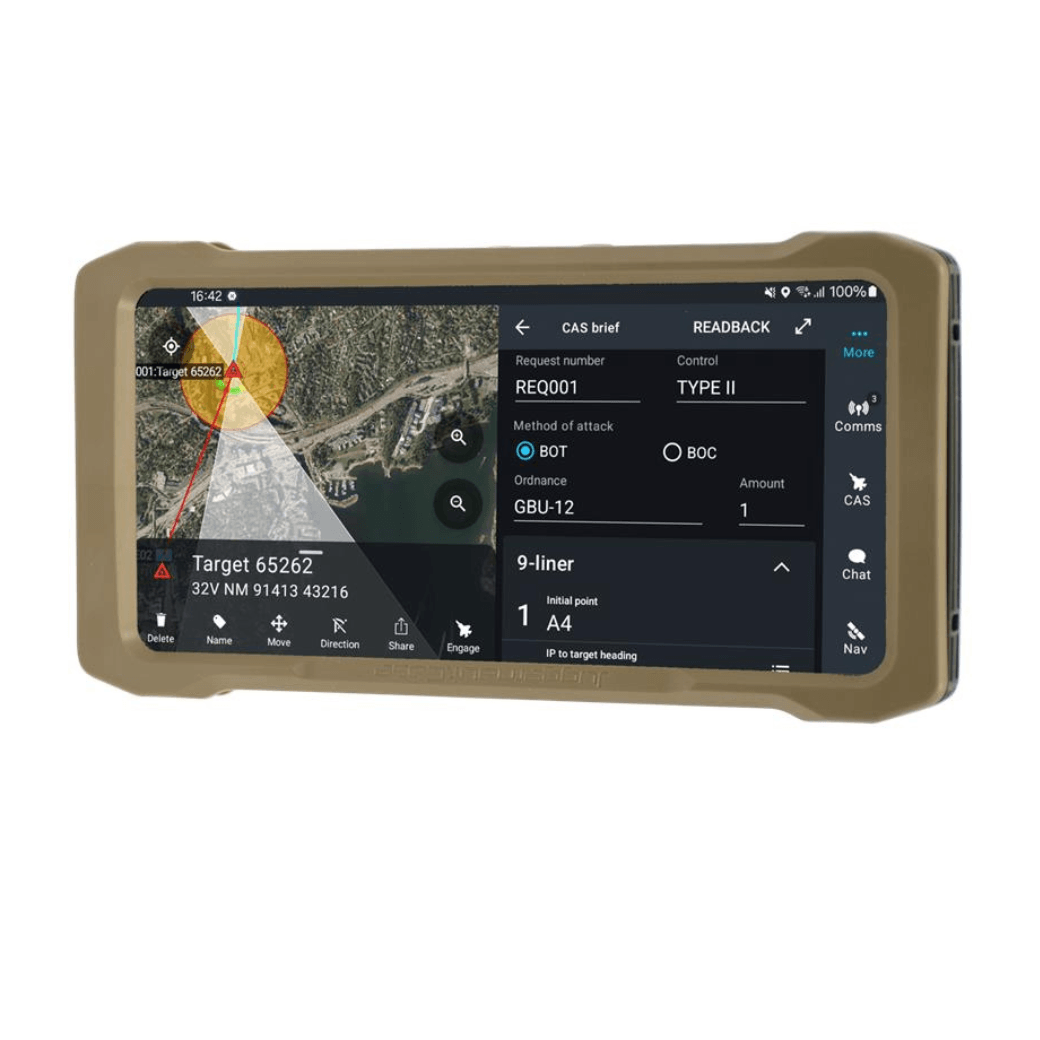
Unifies fire support coordination by allowing both JTACs and JFOs to transmit digital 9-line briefs through the same system. This unified approach ensures ground units coordinate seamlessly with each other, not just with air assets, reducing the risk of conflicting fire missions and enhancing overall battlefield coordination.
Network-Enabled Weapons (NEW) integration
Advanced munitions that can receive and process targeting data in real-time. Directing these weapons over the Link 16 network ensures accurate and timely execution of fire missions. As battlefield conditions change, operators can update target coordinates or abort missions, maximising effectiveness while minimising collateral damage.
Joint Tactical Air Request (JTAR) and mission planning
Allows users to prepare complete mission packages before aircraft arrive in the target area. All briefings, target data and coordination measures are ready for instant transmission, reducing aircraft exposure time and accelerating strikes, ensuring pilots receive comprehensive mission information before entering hostile airspace.
Unmanned systems and sensor integration
Enables coordination with drones, autonomous platforms and sensors for enhanced targeting capabilities and situational awareness. Sensors from manned and unmanned platforms can contribute to the targeting process, expanding the reach and precision of fire support operations while keeping personnel at safer distances.
Mobile fire support capability
FACNAV Mobile brings DACAS capabilities to Android devices, enabling dismounted personnel to coordinate fire support using handheld tablets and smartphones. With full radio and sensor integration, JTACs can operate independently while maintaining connection to the broader fire support network.
Integration with Teleplan Globe's defence suite
FACNAV Fires is designed as part of Teleplan Globe's comprehensive battlefield management ecosystem. This integration creates unprecedented flexibility – a forward observer can designate targets that vehicle commanders refine and aircraft prosecute, all within the same digital ecosystem. The system seamlessly integrates with:
FACNAV BMS
Our proven battlefield management platform
FACNAV DSS
Enables vehicle crews to request immediate fire support
Unmanned systems
Full manned-unmanned teaming capabilities allow crews to coordinate with FACNAV integrated drones and autonomous vehicles
Command networks
Enables fire support coordination from squad to division level
FACNAV DSS
Delivers DACAS capability on Android devices for dismounted operations
Currently interoperable with
VMF-compatible systems
Link 16-equipped platforms
Windows tablets and computers
Android devices
Dig deeper into our solutions
Access detailed product sheets and explore the full scope of our capabilities.