FACNAV CMS
FACNAV Combat Management System (known as MANTIS CMS in the UK) is an advanced combat management system designed to enhance the relative combat effectiveness of individual armoured fighting vehicles and entire armoured formations.
Combat management system for armoured vehicles
By automatically detecting threats, sharing targeting data between vehicles and enabling instant weapon orientation, FACNAV CMS saves crews those vital seconds that can mean the difference between life and death on the battlefield.
Unlike generic solutions that attempt to fit all vehicle types, this system is custom-tailored to each specific platform – currently operational on Leopard 2 main battle tanks (MBT) and CV90 infantry fighting vehicles (IFV).
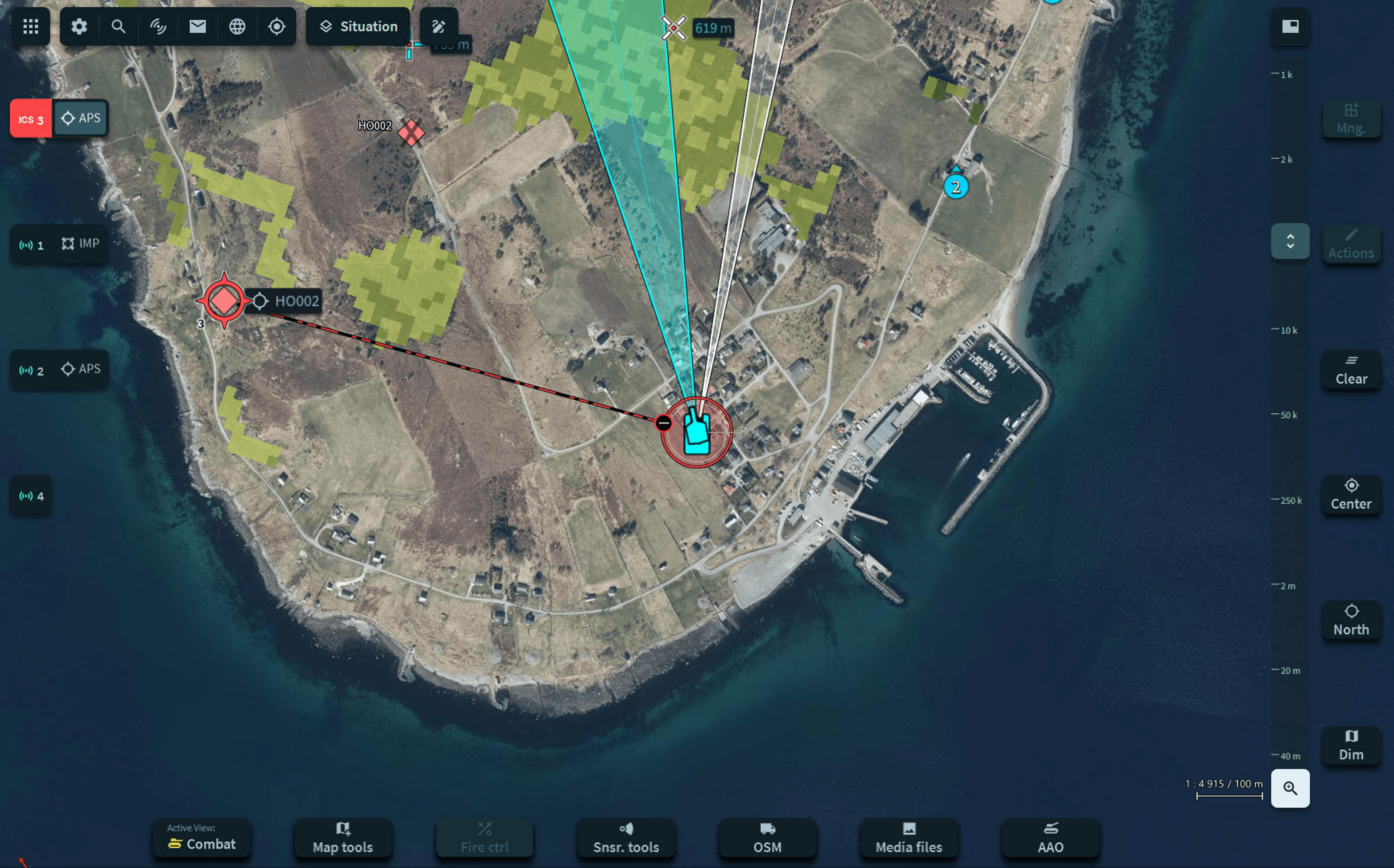
The system's graphical user interface is adapted to every role and function of the combat vehicle, giving each tank and IFV crew member a focused view tailored to their specific responsibilities, eliminating information overload in critical moments.
Providing our crews with an unfair advantage
Modern armoured warfare demands split-second decisions based on complex, rapidly changing information. By reducing cognitive load and accelerating the decision cycle, the system provides our forces with a faster OODA loop (Observe, Orient, Decide, Act) than their opponents. Eliminating the need for time-consuming radio communications, FACNAV CMS transforms how armoured crews operate in combat.
When we send our crews into harm's way, we believe they deserve every possible edge. That's why we design our systems to give them what we like to call an unfair advantage. We want our forces to see first, understand faster and respond more effectively than any opponent they might face.
FACNAV CMS delivers this advantage by

Reacting faster
than the enemy through automated threat detection and response
Sharing critical information
instantly without cluttering radio networks
Maintaining situational awareness
even in the chaos of combat
Coordinating complex manoeuvres
with precision and confidence
Protecting our forces
through enhanced early warning and defensive systems
Key features
This combat management system is not just an upgrade – it's a fundamental transformation in how armoured units fight and survive on the modern battlefield.
Advanced direct fire control
Creates and shares direct fire control measures using vehicle lasers, ensuring all vehicles know exactly where to concentrate their fire – no radio communication needed. Enables one-button target synchronisation, allowing crews to instantly adopt teammates' current targets for coordinated fire.
Target acquisition and sharing
Utilises vehicle sensors to detect, identify and create target data that's instantly shared across the network. Integrates seamlessly with unmanned systems and modules for Digitally Aided Fire Support (DAFS) and close air support (DACAS), creating true manned-unmanned teaming capabilities where all platforms see and engage as one.
Combat navigation
Optimises route planning using real-time geographical data, terrain analysis, vehicle performance metrics and tactical considerations. By identifying steep slopes, water hazards and forest cover, the system helps crews navigate safely through complex terrain whilst avoiding enemy fields of fire and preventing friendly fire.
Sensor integration
Combines all vehicle sensors – cameras, radars, laser detectors and Active Protection Systems (APS) – into one unified picture. It tells crews exactly what's threatening them: weapon type, distance, direction, and time to impact.
Automatic threat response
Instantly shares threat warnings across the platoon. When critical threats are detected, crews can instantly request indirect fire support through integrated DAFS capabilities. When APS detect incoming fire, commanders can redirect their vehicle to engage the same target as a threatened teammate with one button press.
Operational status monitoring and reporting
Provides fully digitalised logistics support for entire mechanised formations. Automated reporting tracks ammunition, fuel and vehicle health across the platoon, ensuring units stay combat-ready without administrative burden.
Intelligent sensor image capture
When the main gun fires, the system captures sensor data and positions, creating a digital record of the engagement. This documentation supports battle damage assessment and enables intelligence personnel to conduct more precise enemy capability assessments without relying on visual confirmation.
Line of sight and weapon coverage
Advanced visualisation showing exactly what each crew member can see and where their weapons can reach. Instantly identifies blind spots and verifies overlapping fields of fire between vehicles, ensuring complete coverage of all approaches.
Role-, function- and hardware-adapted interfaces
Each interface is tailored to operational user needs and hardware-specific capabilities and constraints. Drivers get navigation, gunners get targeting, commanders get the complete picture – all optimised for split-second decisions under stress.
Currently operational on

Leopard 2A4NO MBT, Leopard 2A8 NOR MBT
(upcoming)
CV9030 Mk IIIb infantry fighting vehicle
(C2 and recce variants)
CV90 Mk III
(mortar and combat engineer variants)
Leopard 2
(recovery and bridge layer variants)
M113 armoured personnel carriers
(forward observer, C2 and medical variants)
Our experts
"The battlefield punishes the slow. In my time with the Telemark Battalion, I saw how technological gaps cost lives. That's why we push the boundaries with every system we develop – to give our crews those vital seconds that determine who controls the engagement. FACNAV CMS is built on a simple truth: in combat, the fastest to understand and respond survives."
Haakon Høie Heyeraas, Former officer in the Norwegian Army and Telemark Battalion Product Development Lead, Mounted Manoeuvre
Dig deeper into our solutions
Access detailed product sheets and explore the full scope of our capabilities.